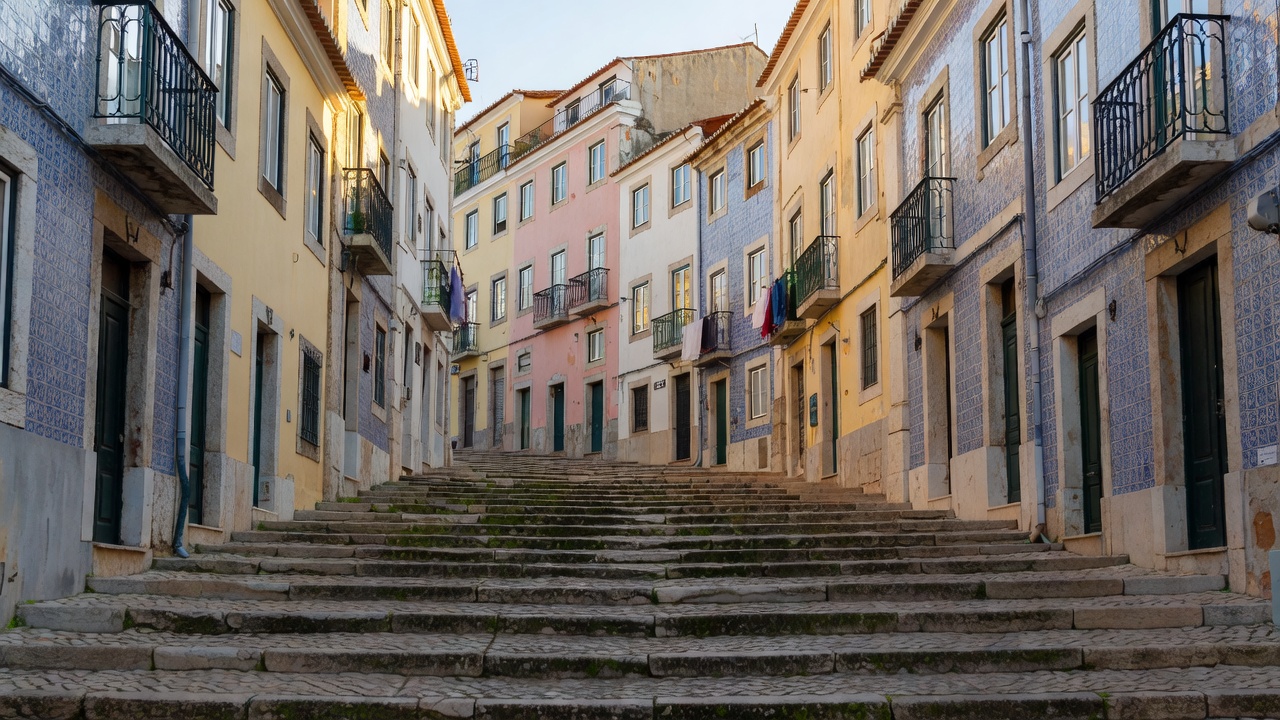
Lisbon is one of Western Europe's oldest capitals, pre-dating Rome by several centuries. Because the catastrophic earthquake of 1755 spared certain hilly eastern districts while flattening the lower Baixa river valley, neighborhood walks here present dramatic architectural contrasts. Alfama and Mouraria retain the organic, winding street plans characteristic of Islamic and medieval Iberian urbanism. Navigating these alleys on foot costs nothing and reveals authentic community life that commercial bus tours completely miss.
Circuit Overview: From Martim Moniz to Alfama’s River Gateway
This self-guided pedestrian circuit connects Lisbon's most historically diverse residential pockets. The route begins at the base of the multicultural Mouraria quarter, winds through the fado cradle along Rua da Guia, climbs past the Graça ridge, and descends through the cascading steps of Alfama to Campo das Cebolas.
Mouraria Alleys & Rua do Capelão
Enter from Praça Martim Moniz. Walk into Rua da Mouraria toward Rua do Capelão. This district was historically assigned to the Moorish population following the Reconquista of 1147 and later became the birthplace of modern Fado through singer Maria Severa Onofriana. The walls display permanent outdoor photographic tributes by artist Camilla Watson.
Calçada do Jogo da Péla & Caracol da Graça
Ascend the steep steps of Caracol da Graça. This path features towering murals, small vertical community gardens, and quiet courtyards away from vehicular traffic. It brings you up to the Largo da Graça square without needing to wait in line for the tram.
Alfama Spine: Rua dos Remédios to Largo do Chafariz de Dentro
Cross through the Portas do Sol gateway and plunge down the Escadinhas de São Miguel. Here, the street narrows to arm-span widths. Banners from the June Festas dos Santos Populares often decorate balconies year-round. Continue down to Chafariz de Dentro, a 17th-century public thermal fountain where neighborhood residents gathered water for generations.
Essential Walking Gear & Footwear Guidance
Walking Lisbon's historic districts requires physical awareness. The celebrated calçada portuguesa (black basalt and white limestone mosaic paving) has been polished smooth by millions of footsteps over centuries. In dry conditions it can be slippery; in rainfall, it requires careful traction.
Walking Tips Checklist
- Footwear: Wear rubber-soled walking shoes with adequate tread. Leather-soled dress shoes or smooth sandals have minimal grip on steep calçada inclines.
- Hydration: Lisbon maintains several free historic drinking fountains (chafarizes) and modern municipal refill stations throughout public squares.
- Public Restrooms: Modern kiosks with coin entry exist, but major transport interchanges (like Santa Apolónia or Cais do Sodré) have accessible municipal facilities.
Pros & Cons: Walking Independently vs Paid Commercial Walking Tours
Free Self-Guided Exploring
- Complete schedule control; stop at viewpoints for as long as desired
- Ability to explore dead-end cul-de-sacs and courtyards without crowd congestion
- Zero expenditure requirement; no pressure for tips or commercial souvenir stops
- Spontaneous interactions with local residents and neighborhood corner shops
Organized Commercial Walking Tours
- Scheduled start times that may clash with heat or sunset conditions
- Large group sizes frequently blocking narrow residential stairwells
- Expected tips or fees (typically €10 to €25 suggested per person)
- Scripted historical anecdotes that often simplify complex regional context
Respectful Exploration in Alfama & Mouraria
Alfama and Mouraria are living residential communities, home to elderly populations who have inhabited these stone buildings for decades. When exploring free self-guided routes, keep noise down in the stairwells, do not peer into ground-floor windows through lowered iron grilles, and respect personal laundry hanging from communal lines across the street.